Journal d'un Chinois
>> –
oriental philosophy
lien
Un weblog écrit en français, sur Philosophie, Chine et Sinologie
lien
Un weblog écrit en français, sur Philosophie, Chine et Sinologie
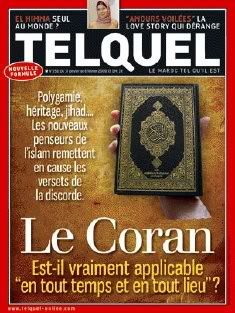
Mohamed Moâtassim, conseiller du roi, transmet aux membres du Conseil consultatif des droits de l’homme une décision du souverain : le Maroc lève ses réserves relatives à la Convention internationale sur l’élimination des discriminations à l’égard des femmes. Des réserves émises par le Maroc, et d’autres pays musulmans, pour des considérations religieuses. Pour le camp moderniste, cette décision s’inscrit dans un long processus de réformes initiées par le roi et dont le nouveau Code de la famille était l’annonciateur. Dans le camp conservateur, la décision royale est plutôt perçue comme une erreur, une provocation, dans tous les cas une maladresse à “corriger”. Polémique. Pour désamorcer la crise, le Conseil supérieur des Ulémas intervient et donne sa réponse.
Selon les vénérables membres du Conseil, la levée des réserves sur ce texte international par le Maroc ne doit pas prêter à confusion, car les choses sont claires : les dispositions contenues dans le Coran, exemple des textes relatifs à l’héritage, sont intouchables et ne sont susceptibles d’aucune interprétation. La messe est dite. L’argument est un classique du genre : pas d’ijtihad (effort interprétatif) en présence d’un texte coranique. Cette phrase n’est qu’un slogan qui, à force d’être répété, enseigné dans les manuels scolaires, ressassé dans les prêches, scandé dans les débats, finit par acquérir un caractère sacré et devient, à son tour, une vérité et une règle inviolable.
Parce que, explique-t-on, le texte coranique traverse le temps, les spécificités culturelles, les changements sociaux, les contextes politiques, sans que son sens et son application ne puissent faire l’objet d’aucune acclimatation ou adaptation possible. Ainsi donc, et toujours d’après cette logique, les dispositions coraniques sont valables en tout temps et en tout lieu. Elles ne sont pas le résultat d’un contexte social et culturel particulier et leur portée est universelle et intemporelle. Quelques exemples puisés dans l’histoire de l’islam permettent, cependant, de contrebalancer, voire d’invalider, cette “vérité”. [full text]
Books on Buddhism, logics, and philosophy
C. T. R. Hayward, “Interpretations of the Name Israel in Ancient Judaism and Some Early Christian Writings: From Victorious Athlete to Heavenly Champion”
Oxford University Press (2005) | English | ISBN 0199242372 | 422 pages | PDF | 1.84 MB
Ancient peoples regarded names as indicative of character and destiny. The Jews were no exception. This is a critical study of ancient exegesis of the title ‘Israel’ and the meanings attributed to it among Jews down to Talmudic times, along with some early Christian materials. C. T. R. Hayward explores ancient etymologies of ‘Israel’, and the utilization of these very varied explanations of the name in sustained works of exegesis like Jubilees; the writings of Ben Sira, Philo, and Josephus; and selected Rabbinic texts including Aramaic Targumim. He also examines translational works like the Septuagint, to illuminate those writings’ sense of what it meant to be a Jew.


2 : Discussion on Making All Things Equal
3 : The Secret of Caring for Life
4 : In the World of Men
5 : The Sign of Virtue Complete
6 : The Great and Venerable Teacher
7 : Fit for Emperors and Kings
8 : Webbed Toes
10 : Riffling Trunks
11 : Let It Be, Leave It Alone
12 : Heaven and Earth
13 : The Way of Heaven
14 : The Turning of Heaven
15 : Constrained in Will
16 : Mending the Inborn Nature
17 : Autumn Floods
18 : Perfect Happiness
20 : The Mountain Tree
21 : T'ien Tzu-fang
22 : Knowledge Wandered North
23 : Keng-sang C'hu
24 : Hsu Wu-kei
25 : Tse-yang
27 : Inputed Words
28 : Giving Away a Throne
29 : Robber Chih
30 : Discoursing on Swords
31 : The Old Fishermman
32 : Lieh Yu-k'ou
33 : The World
Ladies and Gentlemen: Tonight, as long as time permits, I would like to investigate the following questions: I. Does Islam recognize man as a helpless creature whose ultimate goal and ideal is to stand powerless in front of God? II. Does Islam recognize humanness as a nobility? III. Is helpiessness in man a pre-requisite of belief in Islam, or on the contrary, is belief in Islam enough to bestow originality upon man and a respect for his virtues?
Ali Shariati (Persian: علی شريعتی) (1933–1977) was an Iranian sociologist, well known and respected for his work in the field of sociology of religion. He is known as one of the most original and influential Iranian social thinkers of the 20th century.



© Blogger template Shush by Ourblogtemplates.com 2009
Back to TOP